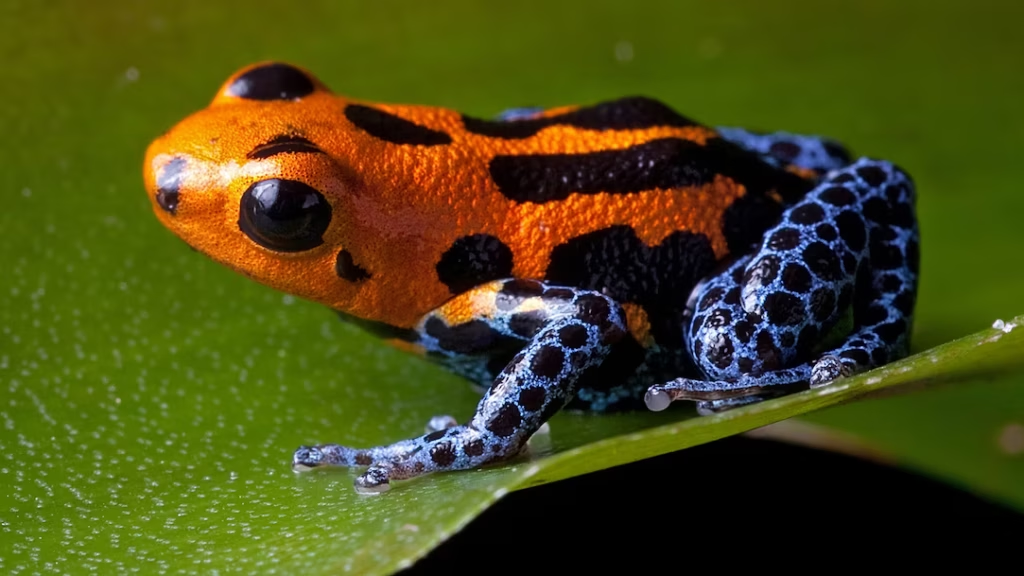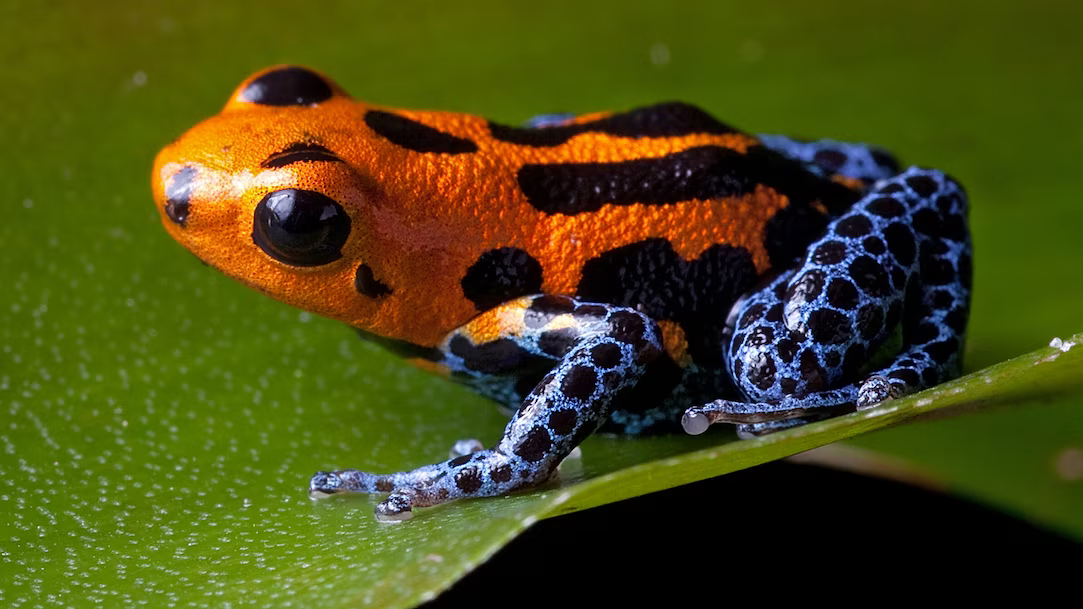
They possess aposematic coloration, which is the use of brilliant, bright colors like yellow or blue to signal danger. This adaptation warns potential predators that their skin contains deadly toxins, deterring them from attacking.
They exhibit mimicry, which is when one species resembles another to gain a survival advantage. This adaptation allows them to look like more dangerous or toxic organisms, discouraging predators from attacking even if they are harmless.
They have nocturnal behavior, which means they are active at night. This adaptation helps them avoid daytime predators and reduces competition for food, increasing their chances of survival.
They use echolocation, which is the ability to produce sounds and interpret the returning echoes to locate objects. This adaptation allows them to navigate and hunt in complete darkness, making it easier to find prey and avoid obstacles.
They demonstrate territorial behavior, which is when an animal defends a specific area from others. This adaptation ensures access to resources like food and shelter, improving their chances of survival and reproduction.
They have webbed feet, which are toes connected by a thin layer of skin. This adaptation helps them swim efficiently, allowing them to escape predators and catch aquatic prey more easily.