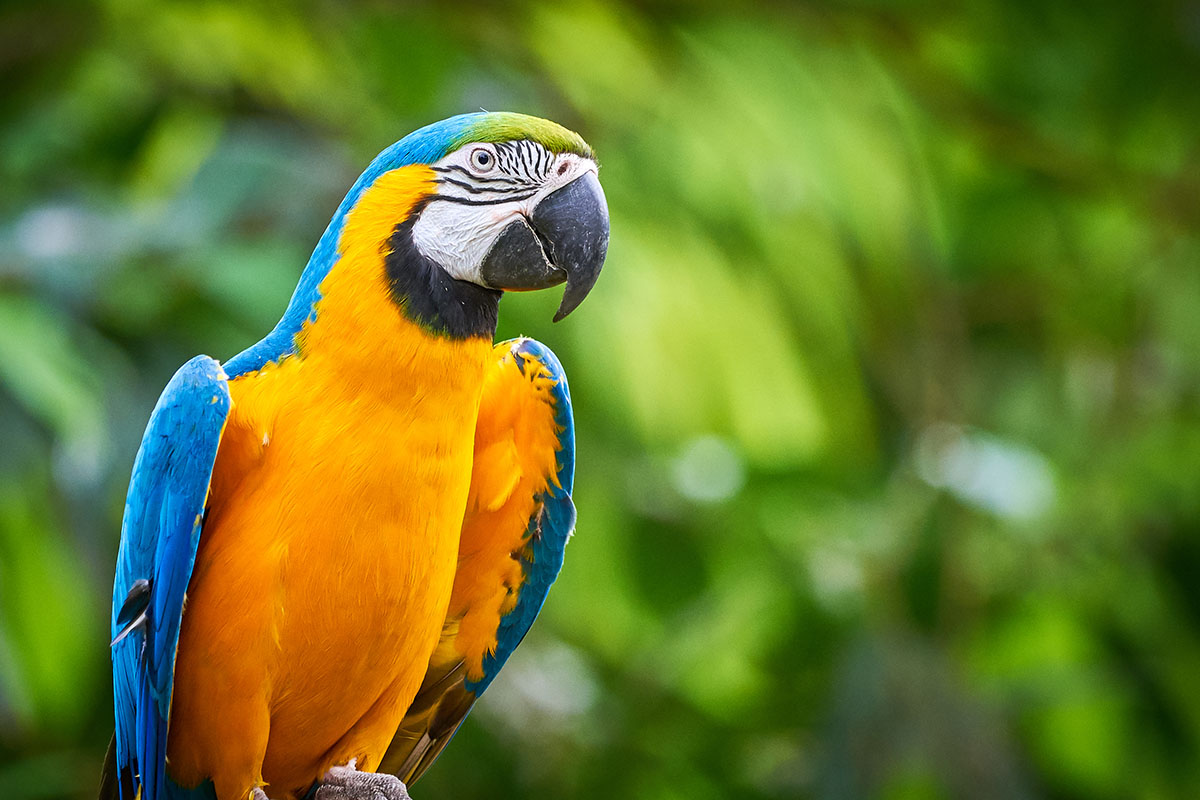
Their strong, curved beaks are specifically designed to crack open the exceptionally hard nuts and seeds found in the rainforest. This gives them access to a reliable food source that many other animals cannot eat.
They possess specialized crushing beaks, which are strong, curved structures adapted for breaking hard materials. This adaptation allows them to open tough nuts and seeds, giving them access to a food source that many other animals cannot use.
They exhibit dietary specialization, which means they rely on specific types of food. This adaptation reduces competition with other species, since fewer animals are able to eat the same hard seeds and nuts.
They have powerful jaw muscles, which provide the force needed to crack open hard shells. This adaptation increases feeding efficiency, allowing them to access nutrients quickly and effectively.
They demonstrate niche partitioning, which is when species use different resources to reduce competition. This adaptation helps them survive in environments where food sources are limited by focusing on items other animals avoid.
They use manipulative feeding behavior, which involves handling and positioning food to make it easier to eat. This adaptation helps them control and break apart tough seeds, improving their ability to feed successfully.