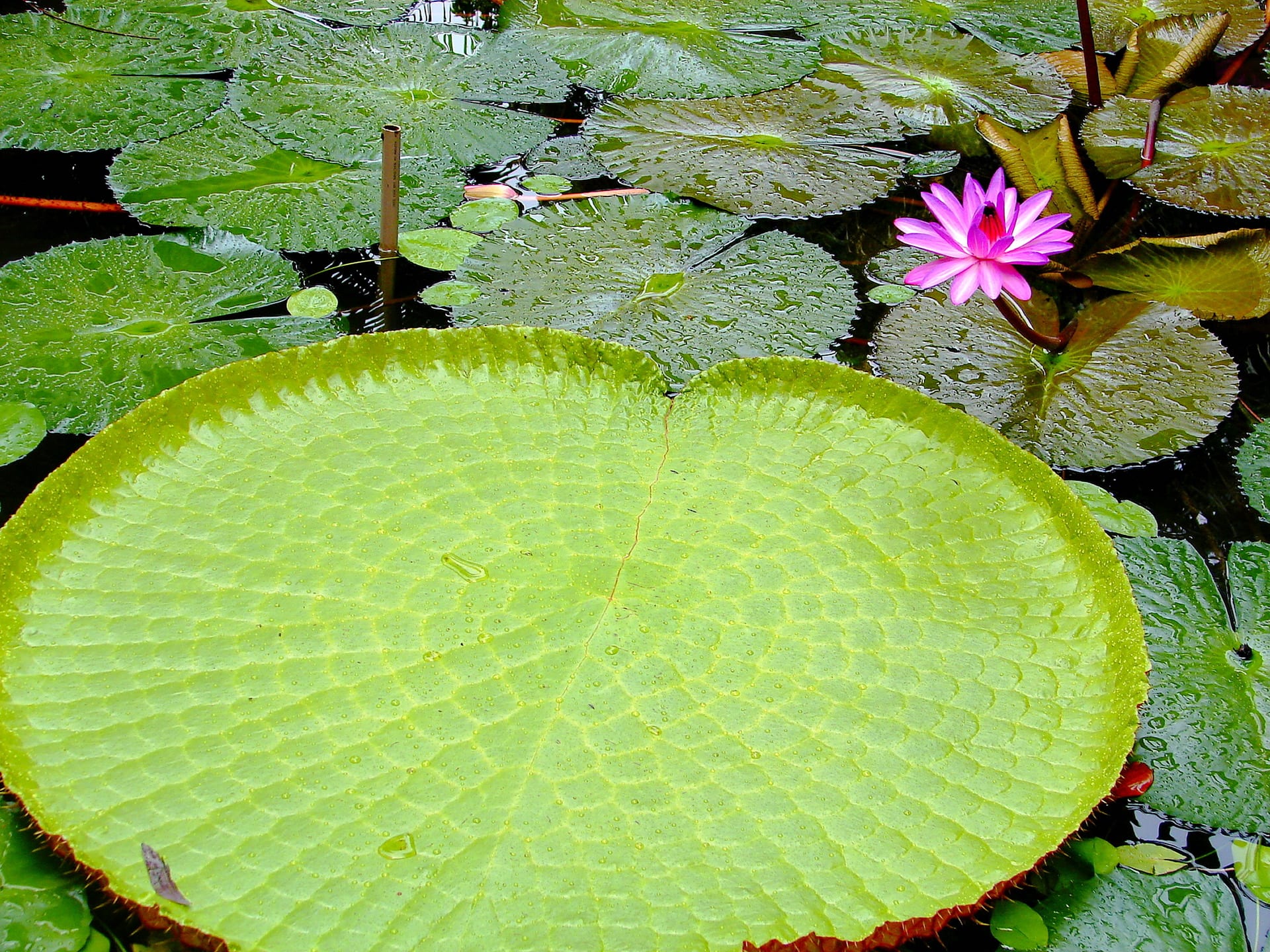
Giant water lilies (primarily genus Victoria) are massive tropical aquatic plants native to the Amazon basin, famous for lily pads that grow up to 3 meters (10 feet) across, supported by strong, buoyant veined structures.
Giant water lilies, especially Victoria amazonica (the Amazon water lily), are very large plants that live in slow rivers and lakes in the Amazon rainforest in South America. They grow in freshwater areas where the water can be muddy and where water levels change during the year. These plants are rooted in the soft mud at the bottom, but their huge leaves float on the surface. They have to deal with problems like not getting enough sunlight underwater, animals that might eat them, and changing water levels.
One of the most interesting adaptations of giant water lilies is their enormous round leaves. These leaves can grow up to 10 feet wide. They float on the surface and give the plant a big area to absorb sunlight, which helps it make food through photosynthesis. The edges of the leaves curve upward like a rim, which helps keep water from flooding the top of the leaf. Their large size also helps block sunlight from reaching other plants below, giving the water lily an advantage.
The bottom of the leaves has a strong structure made of thick veins and air spaces. These air pockets help the leaves float and stay on the surface. The veins are arranged in a pattern that helps support the leaf and spread out weight, so it doesn’t break easily. Because of this, the leaves are strong enough to hold some weight without sinking.
Another important adaptation is the sharp spines on the underside of the leaves and along the stems. These spines protect the plant from animals that might try to eat it, like fish or other aquatic creatures. This helps the plant survive in an environment where many animals feed on plants.
Giant water lilies also have special ways of reproducing. Their flowers bloom at night and change color from white to pink. This helps attract pollinators like beetles. After pollination, the plant pulls the developing fruit underwater to keep it safe. The seeds can float and spread to new areas, and they can survive in the mud until conditions are right to grow again.
Finally, the top of the leaves has a waxy coating that repels water. This keeps the surface dry so the plant can still exchange gases even when it rains. The plant also has long stems that can stretch as water levels rise and fall. All of these adaptations help giant water lilies survive and grow in their environment.