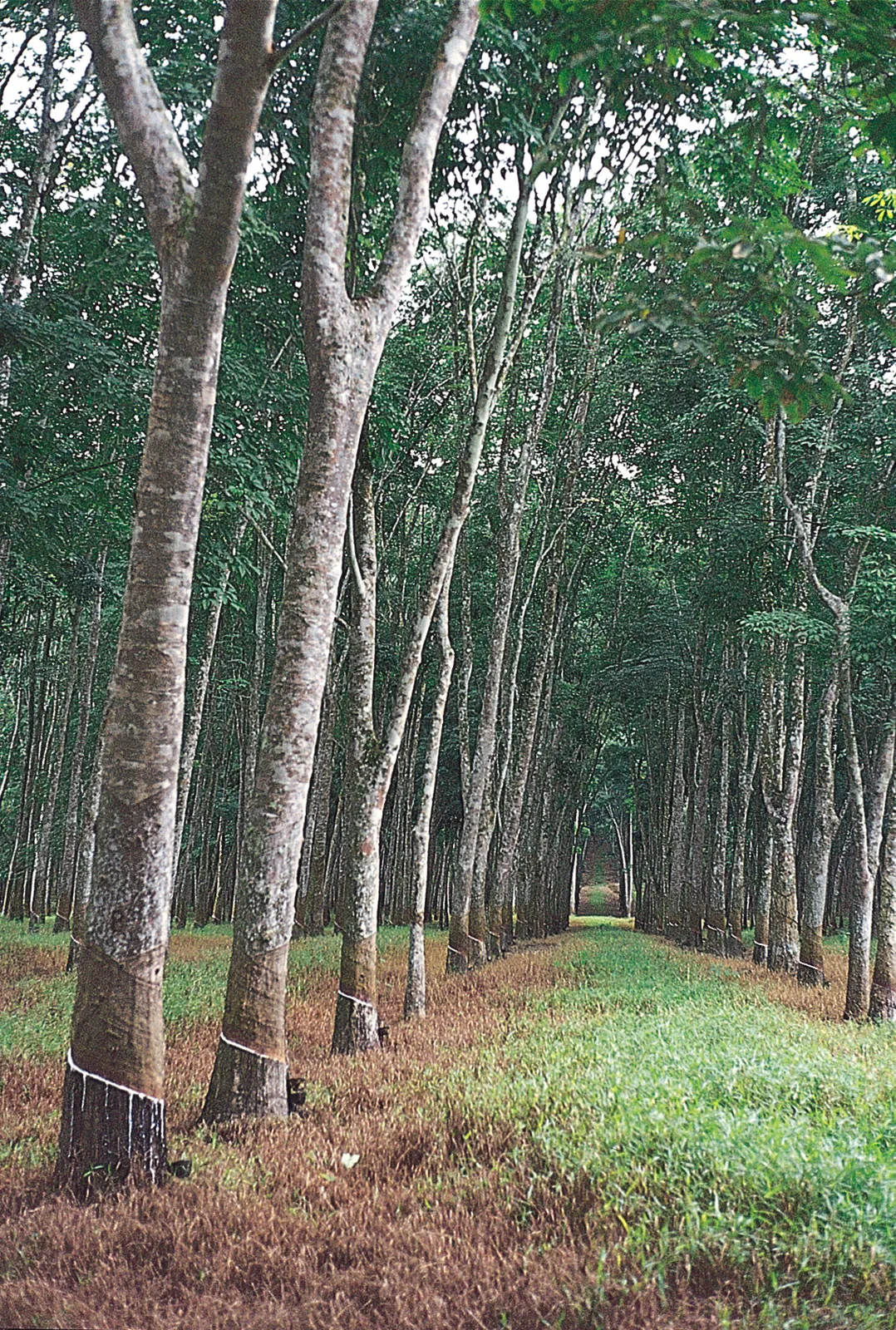
This tree produces a thick, milky sap (latex) that oozes out when the bark is damaged. This adaptation serves as a defense mechanism; the sticky sap gum up the mouthparts of insects and can be toxic to fungi, protecting the tree from pests and infections common in the damp environment.
They produce latex sap, which is a thick, sticky fluid released when the bark is damaged. This adaptation helps seal wounds quickly and prevents harmful organisms from entering the tree.
They exhibit chemical defense, which is the use of toxic or irritating substances to deter predators and pathogens. This adaptation helps protect the tree from insects and fungi that are common in humid environments.
They rely on wound sealing responses, which is when a plant rapidly reacts to injury by producing protective materials. This adaptation reduces infection risk and helps the tree survive physical damage.
They demonstrate anti-herbivory strategies, which are traits that discourage animals from eating them. This adaptation protects leaves and bark by making them difficult or harmful for insects to consume.
They show antimicrobial properties, which means their sap can inhibit the growth of bacteria and fungi. This adaptation helps the tree stay healthy in damp rainforest conditions where infections spread easily.