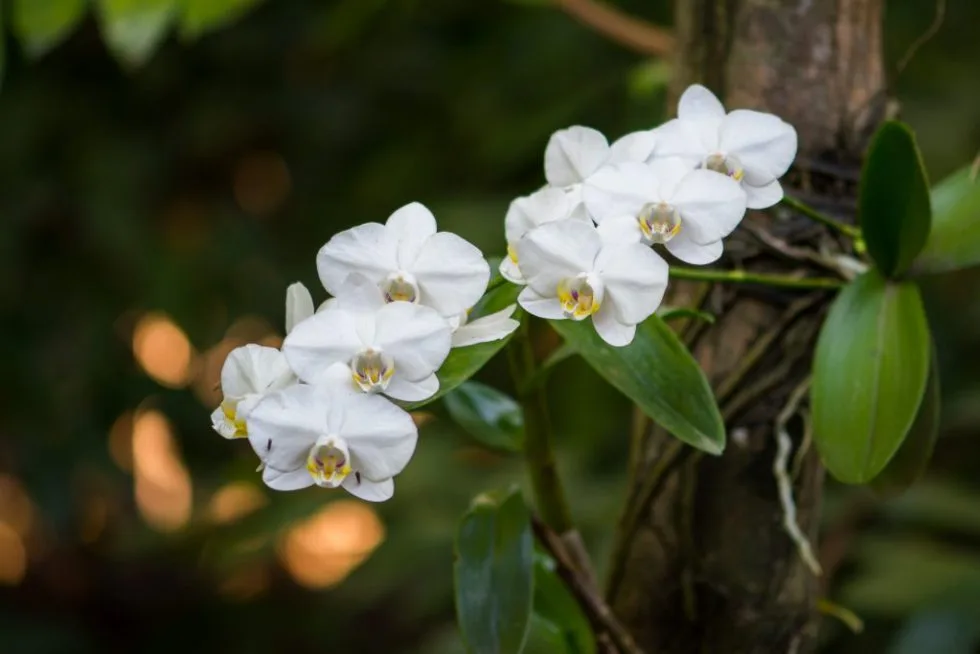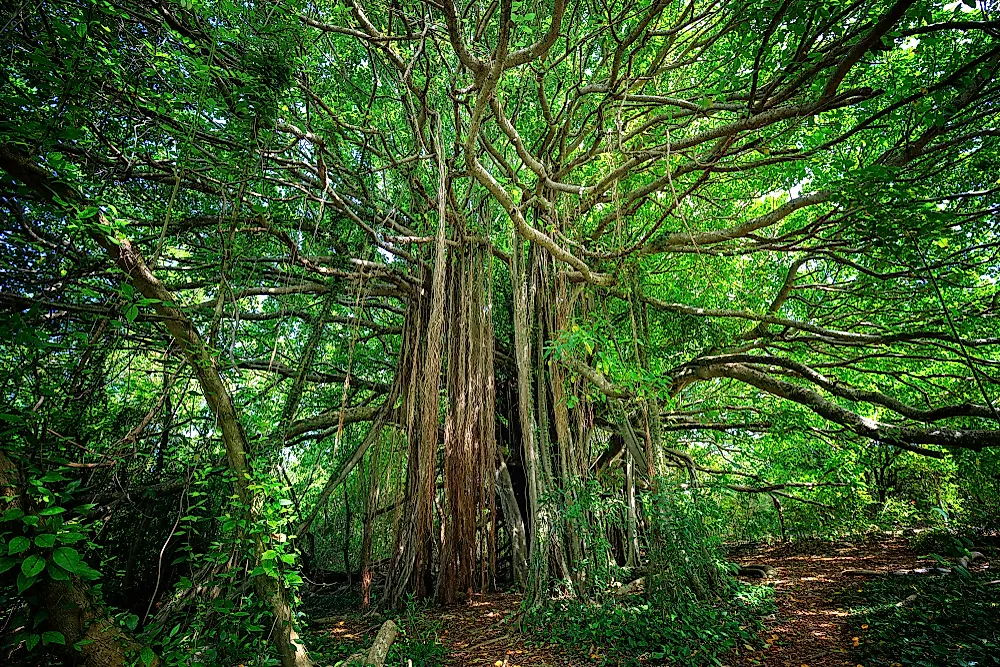
They begin life as epiphytes high in the canopy and grow long aerial roots that eventually reach the ground. This adaptation allows them to compete for sunlight without waiting years to grow from the dark forest floor. Over time, their roots “strangle” the host tree to claim its space and nutrients.
They exhibit epiphytic growth, which is when a plant grows on another plant for support. This adaptation allows them to reach sunlight in the canopy without competing on the dark forest floor, increasing their chances of survival.
They develop aerial roots, which are roots that grow above the ground and eventually reach the soil. This adaptation helps them access water and nutrients while still living high in the trees.
They demonstrate competitive exclusion, which is when one organism outcompetes another for resources. This adaptation allows them to overtake their host tree, securing more space, sunlight, and nutrients.
They use structural support strategies, which involve relying on other plants to gain height. This adaptation reduces the energy needed to grow a thick trunk early on, allowing them to focus on reaching light quickly.
They exhibit parasitic-like competition, which is when one organism benefits while harming another. This adaptation helps them dominate their environment by eventually “strangling” the host tree and taking over its resources.