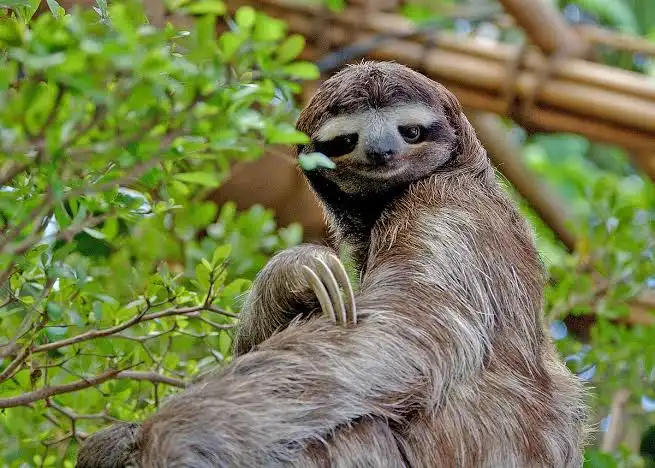
They have a symbiotic relationship with algae that grows in their grooved fur, often giving them a greenish tint. This serves as highly effective camouflage, helping them blend in with the mossy leaves to remain invisible to predators like harpy eagles.
They exhibit mutualism, which is a type of symbiotic relationship where both organisms benefit. This adaptation allows algae to grow in their fur while the animal gains camouflage, helping it blend into its environment and avoid predators.
They have specialized fur with grooves, which are small channels that retain moisture. This adaptation creates an ideal environment for algae to grow, enhancing their camouflage and increasing their chances of survival.
They display cryptic coloration, which is the ability to blend into their surroundings. This adaptation makes them difficult for predators to spot among the green foliage, reducing the likelihood of being attacked.
They demonstrate low movement behavior, which means they move very slowly and infrequently. This adaptation works with their camouflage to make them even harder to detect, helping them avoid predators like harpy eagles.
They rely on predator avoidance strategies, which are behaviors or traits that reduce the risk of being eaten. This adaptation increases their chances of survival by minimizing detection in their natural habitat.